![[web-size] 007 MET_TRISTAN UND ISOLDE_dress rehearsal_photo Karpati&Zarewicz.jpg](https://images.squarespace-cdn.com/content/v1/59b16c47a9db090e48236199/1790617213791-CYQZP1072OC8EUS7EQ19/%5Bweb-size%5D+007+MET_TRISTAN+UND+ISOLDE_dress+rehearsal_photo+Karpati%26Zarewicz.jpg)
![[web-size] 019 MET_TRISTAN UND ISOLDE_dress rehearsal_photo Karpati&Zarewicz.jpg](https://images.squarespace-cdn.com/content/v1/59b16c47a9db090e48236199/1790617213807-NGU9QYTY09JE9C2N4JY6/%5Bweb-size%5D+019+MET_TRISTAN+UND+ISOLDE_dress+rehearsal_photo+Karpati%26Zarewicz.jpg)
![[web-size] 020 MET_TRISTAN UND ISOLDE_dress rehearsal_photo Karpati&Zarewicz.jpg](https://images.squarespace-cdn.com/content/v1/59b16c47a9db090e48236199/1790617214903-82CRMVTG15DSMUS7BHC4/%5Bweb-size%5D+020+MET_TRISTAN+UND+ISOLDE_dress+rehearsal_photo+Karpati%26Zarewicz.jpg)
![[web-size] 031 MET_TRISTAN UND ISOLDE_dress rehearsal_photo Karpati&Zarewicz.jpg](https://images.squarespace-cdn.com/content/v1/59b16c47a9db090e48236199/1790617215032-E9H4QF8HL6RPEPUXAD91/%5Bweb-size%5D+031+MET_TRISTAN+UND+ISOLDE_dress+rehearsal_photo+Karpati%26Zarewicz.jpg)
![[web-size] 077 MET_TRISTAN UND ISOLDE_dress rehearsal_photo Karpati&Zarewicz.jpg](https://images.squarespace-cdn.com/content/v1/59b16c47a9db090e48236199/1790617216120-H1H3W5LNQR7P65XN6THA/%5Bweb-size%5D+077+MET_TRISTAN+UND+ISOLDE_dress+rehearsal_photo+Karpati%26Zarewicz.jpg)
![[web-size] 098 MET_TRISTAN UND ISOLDE_dress rehearsal_photo Karpati&Zarewicz.jpg](https://images.squarespace-cdn.com/content/v1/59b16c47a9db090e48236199/1790617216154-9B2UWLL9D38KNA1U289R/%5Bweb-size%5D+098+MET_TRISTAN+UND+ISOLDE_dress+rehearsal_photo+Karpati%26Zarewicz.jpg)
Music and libretto by Richard Wagner
Metropolitan Opera House
New York, NY
March 9–April 4, 2026
Set Design: Es Devlin
Video Design: Ruth Hogben
Choreography: Annie-B Parson
Costume Design: Clint Ramos
Projection and Laser Design: Jason H. Thompson
Lighting Design: John Torres
Metropolitan Opera Orchestra
Conductor: Yannick Nézet-Séguin
Metropolitan Opera Chorus
Chorus Director: Tilman Michael
Yuval Sharon's Metropolitan Opera debut production of Tristan und Isolde takes Wagner’s infatuation with Dharmic philosophy, acquired by way of Schopenhauer, as an opportunity to meditate on the themes of death and rebirth within the opera while recasting the undertaking of a new opera production as a communal ritual in and of itself.
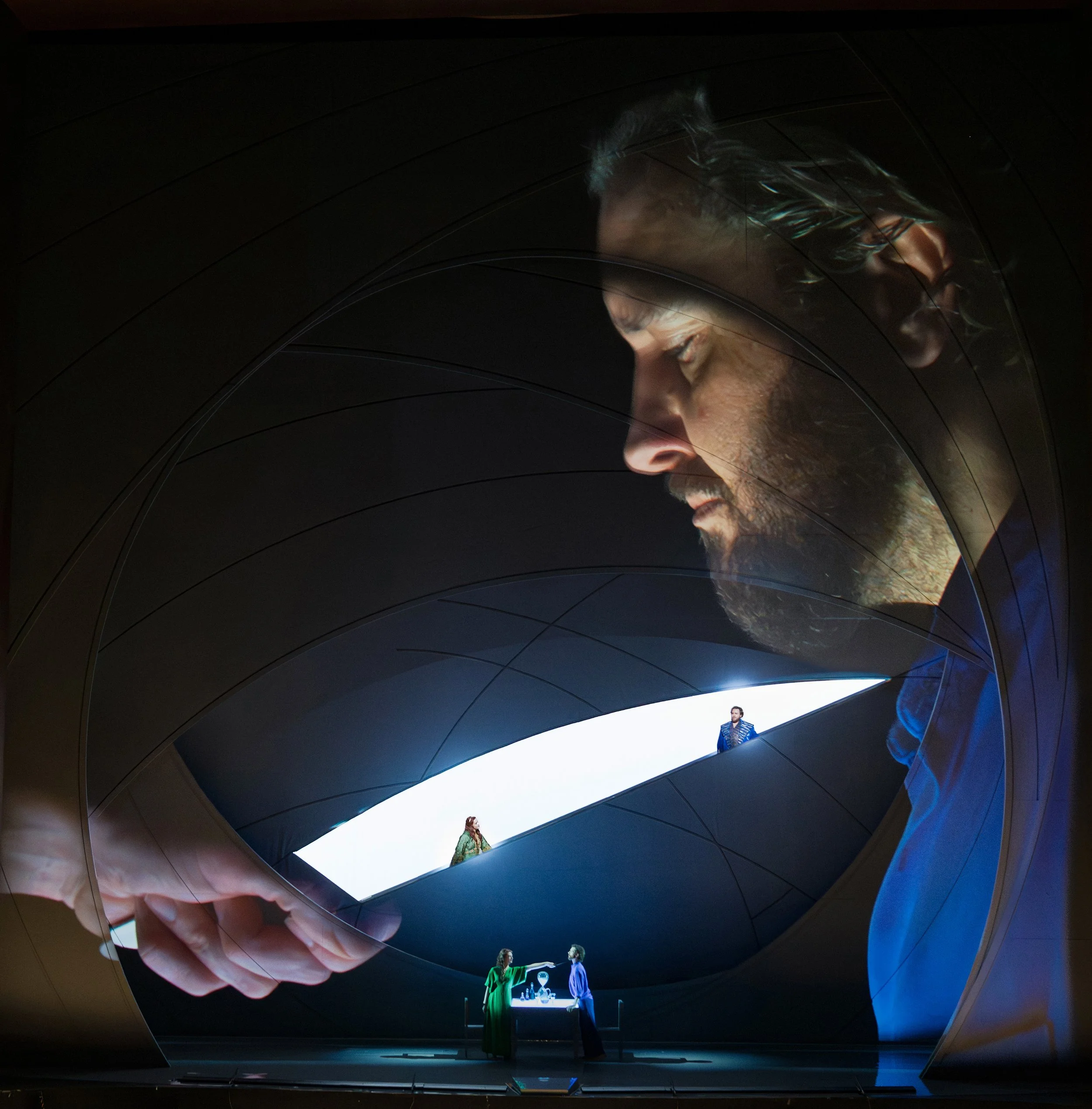
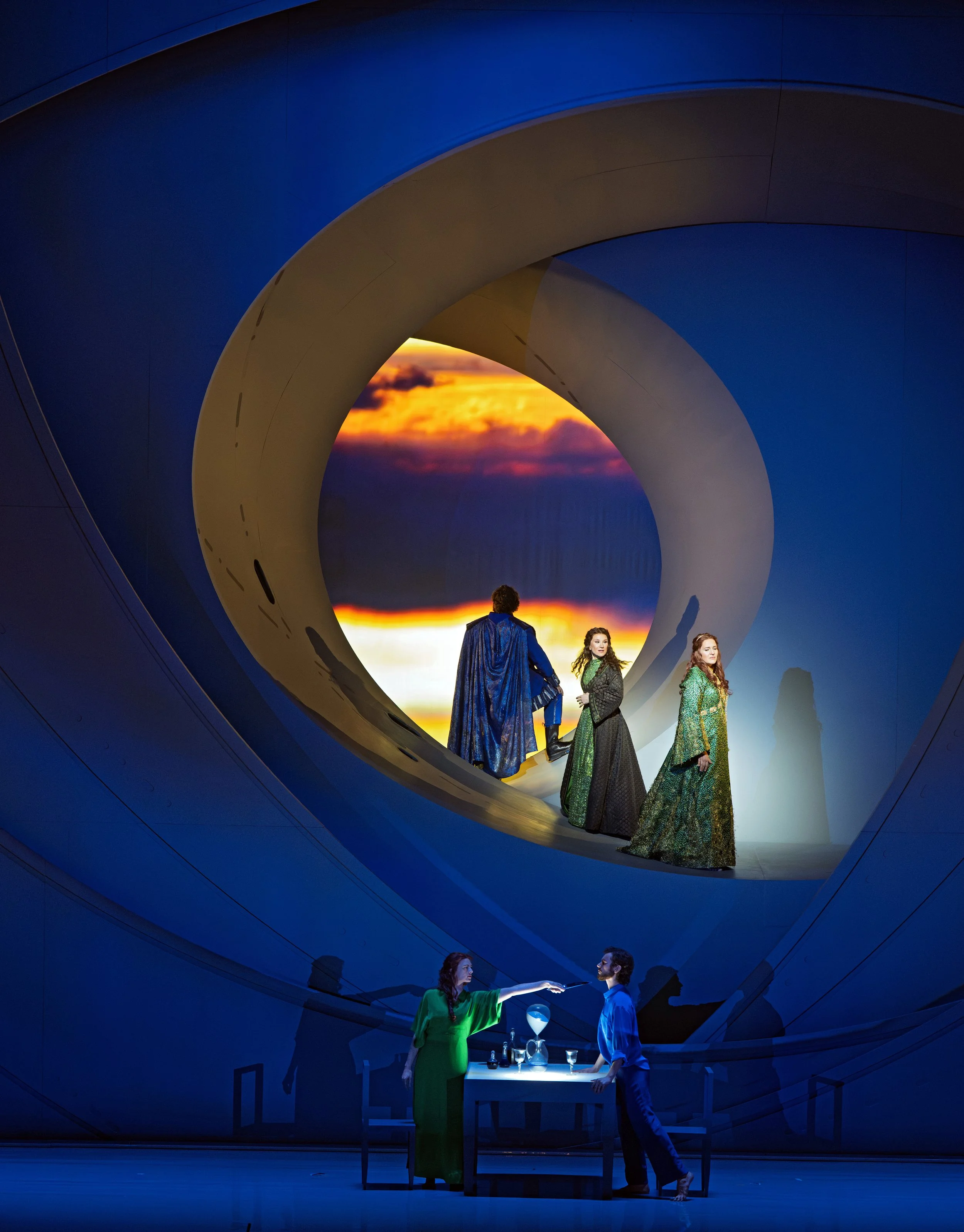
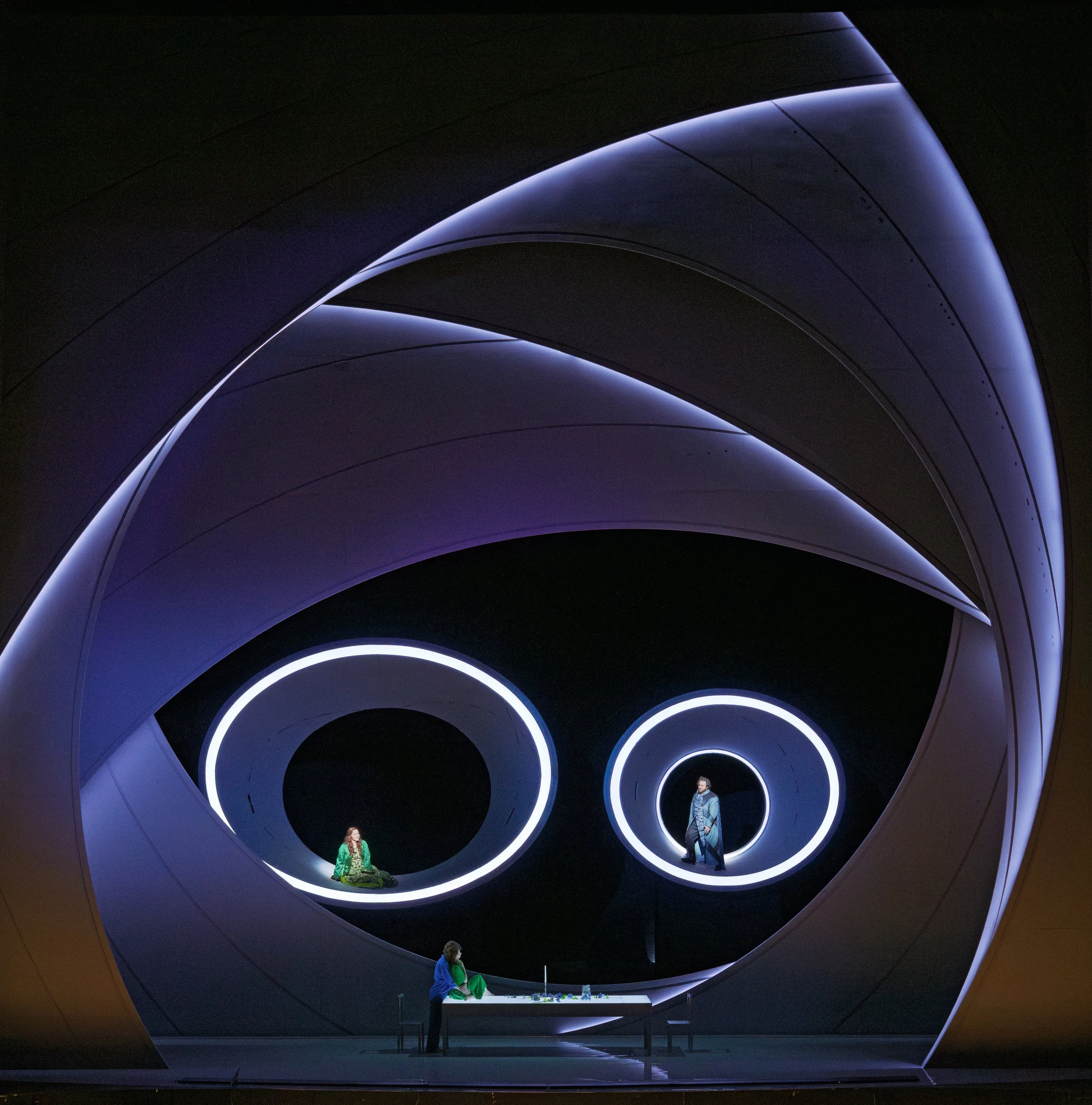
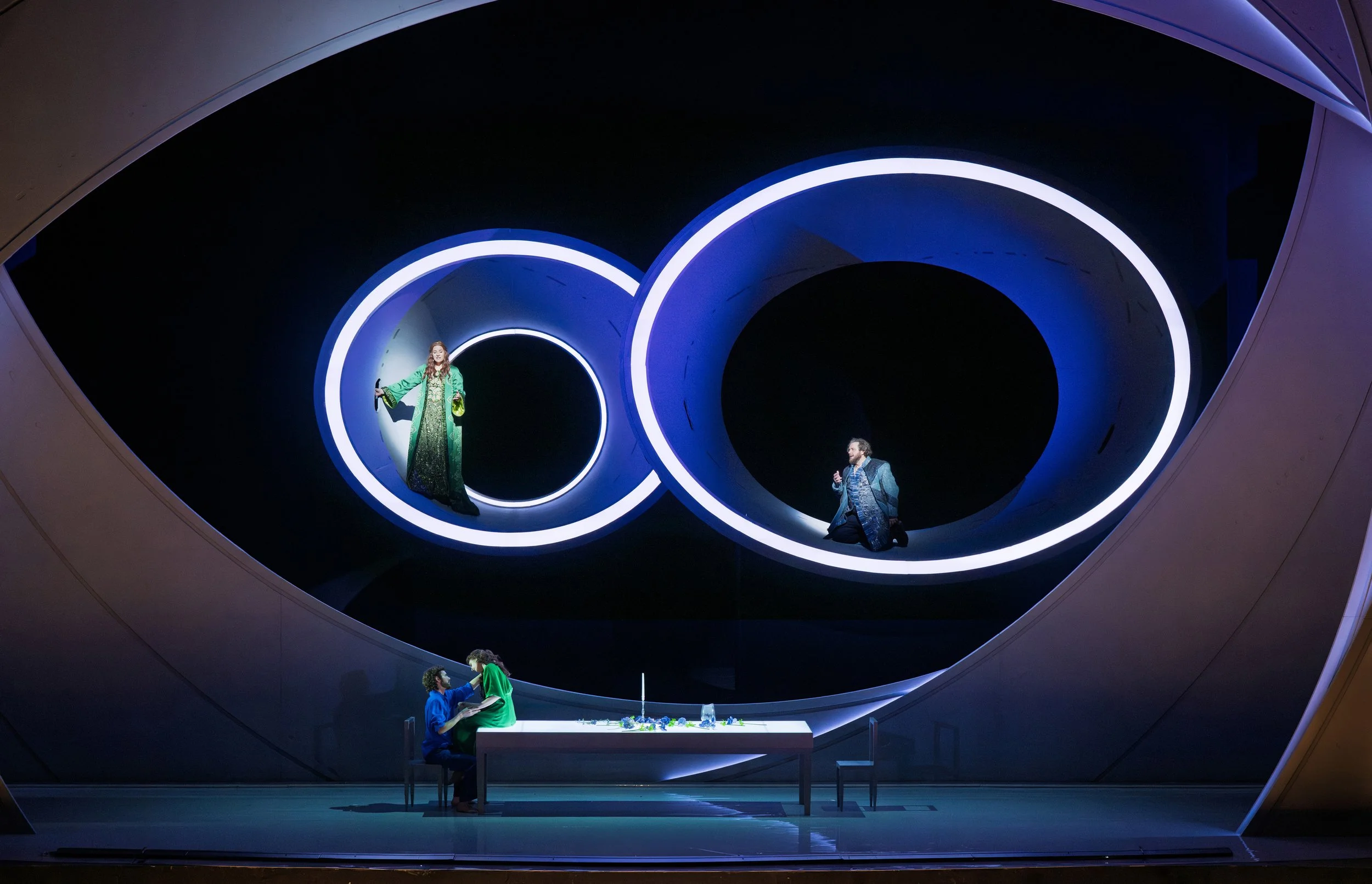
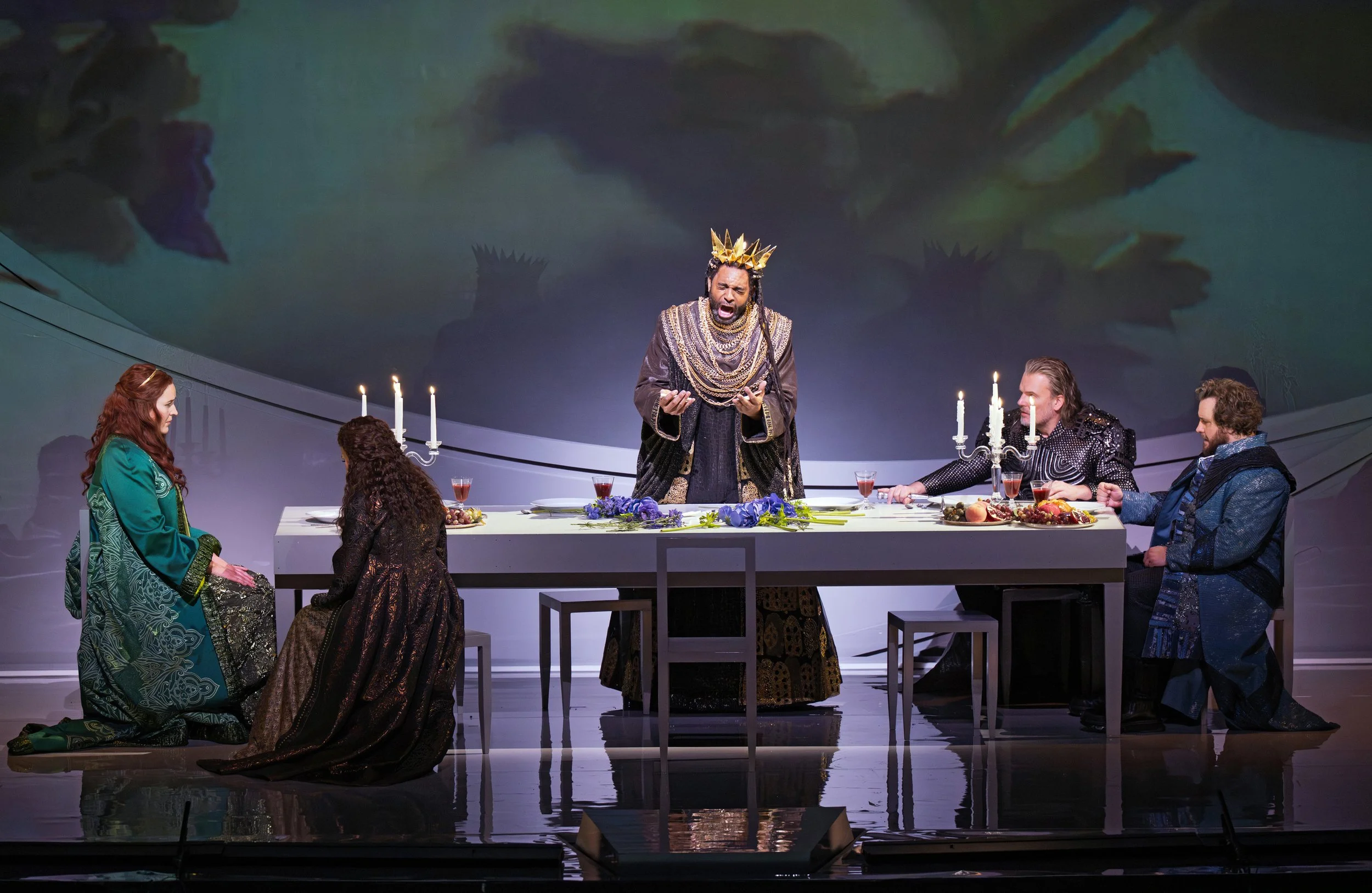
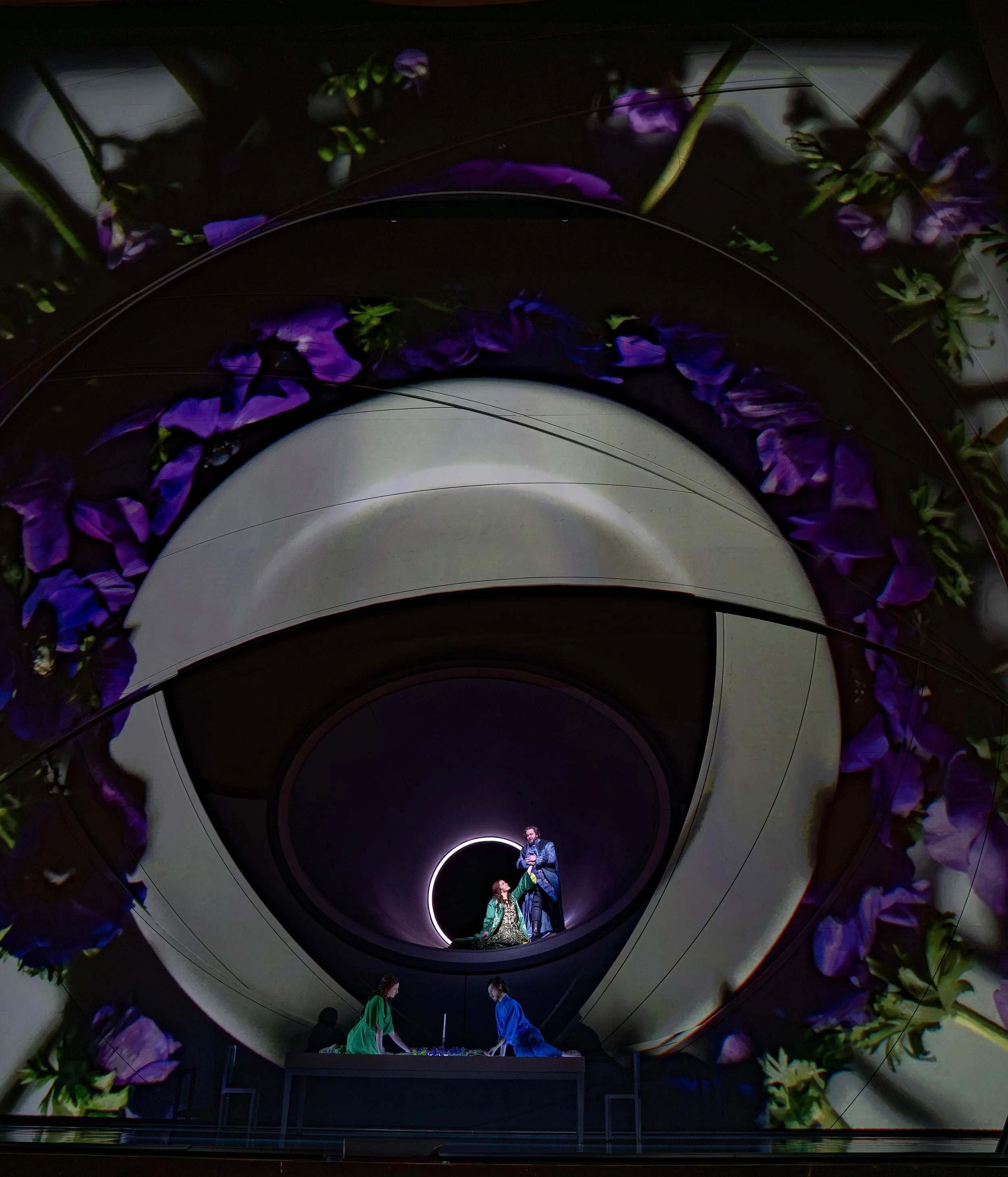
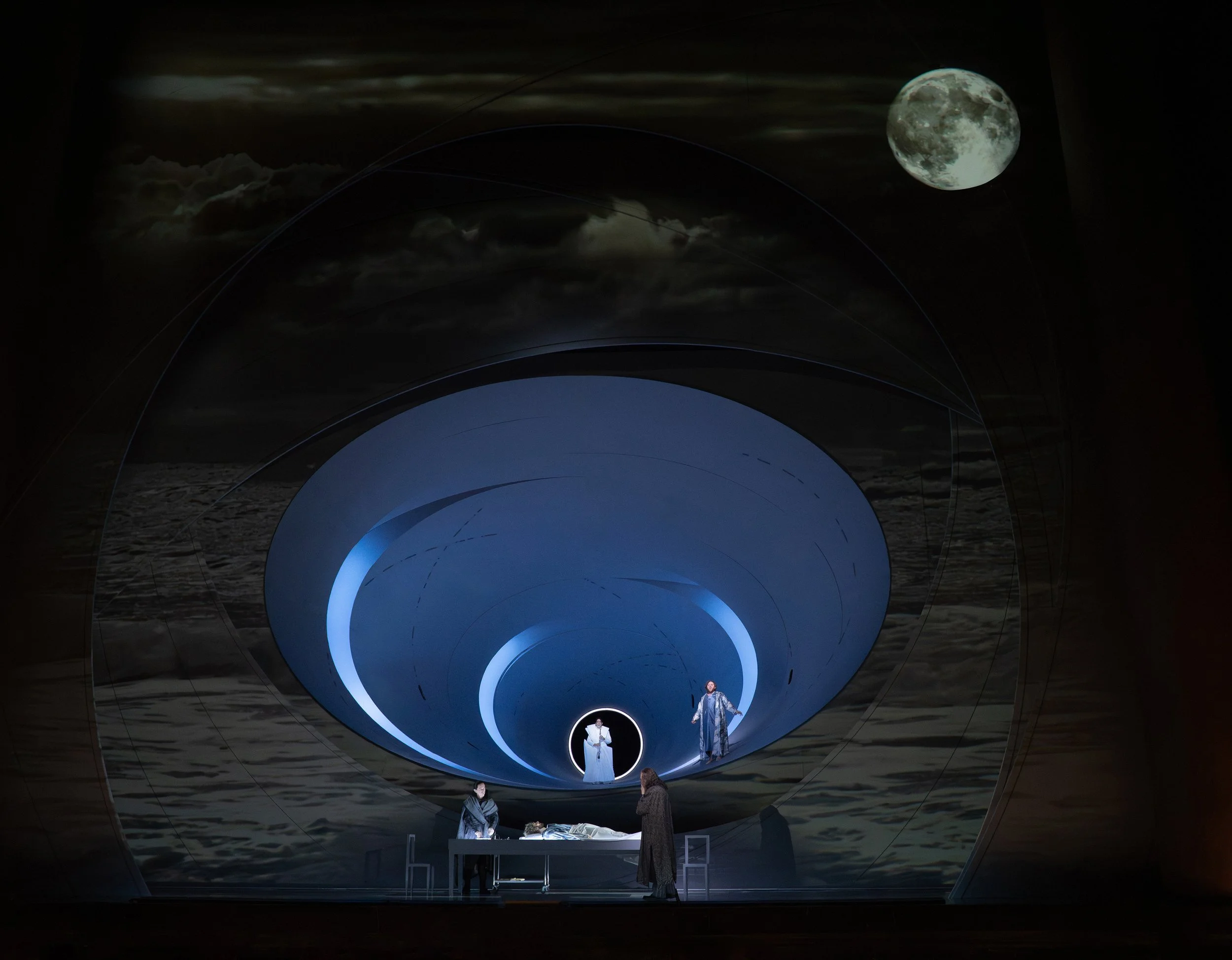
Sharon stages this enduring mystery in two sets designed by Es Devlin. The first is a table at which a pair of lovers—contemporary stand-ins for Tristan and Isolde—sit with a spread of totemic objects, all magnified and projected across the entirety of the stage. As they manipulate the objects on their table, the story is set in motion: a jug of water becomes the ocean that carries Tristan’s ship, the momentary gleam of a knife a stage on which Tristan and Isolde’s fate is revealed. The most ordinary of people and objects become imbued with mythic stature, containing infinite worlds of nested stories within.
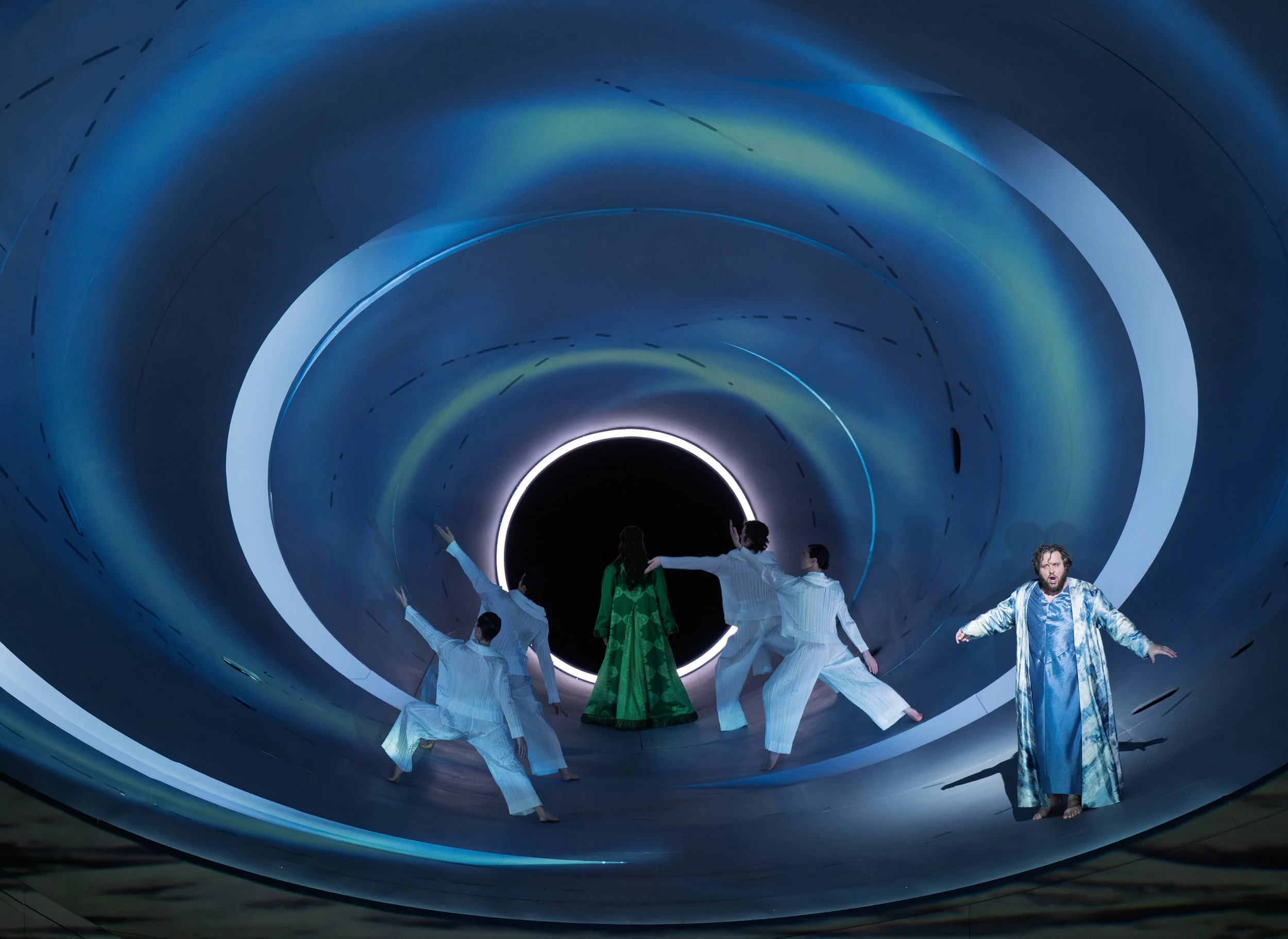
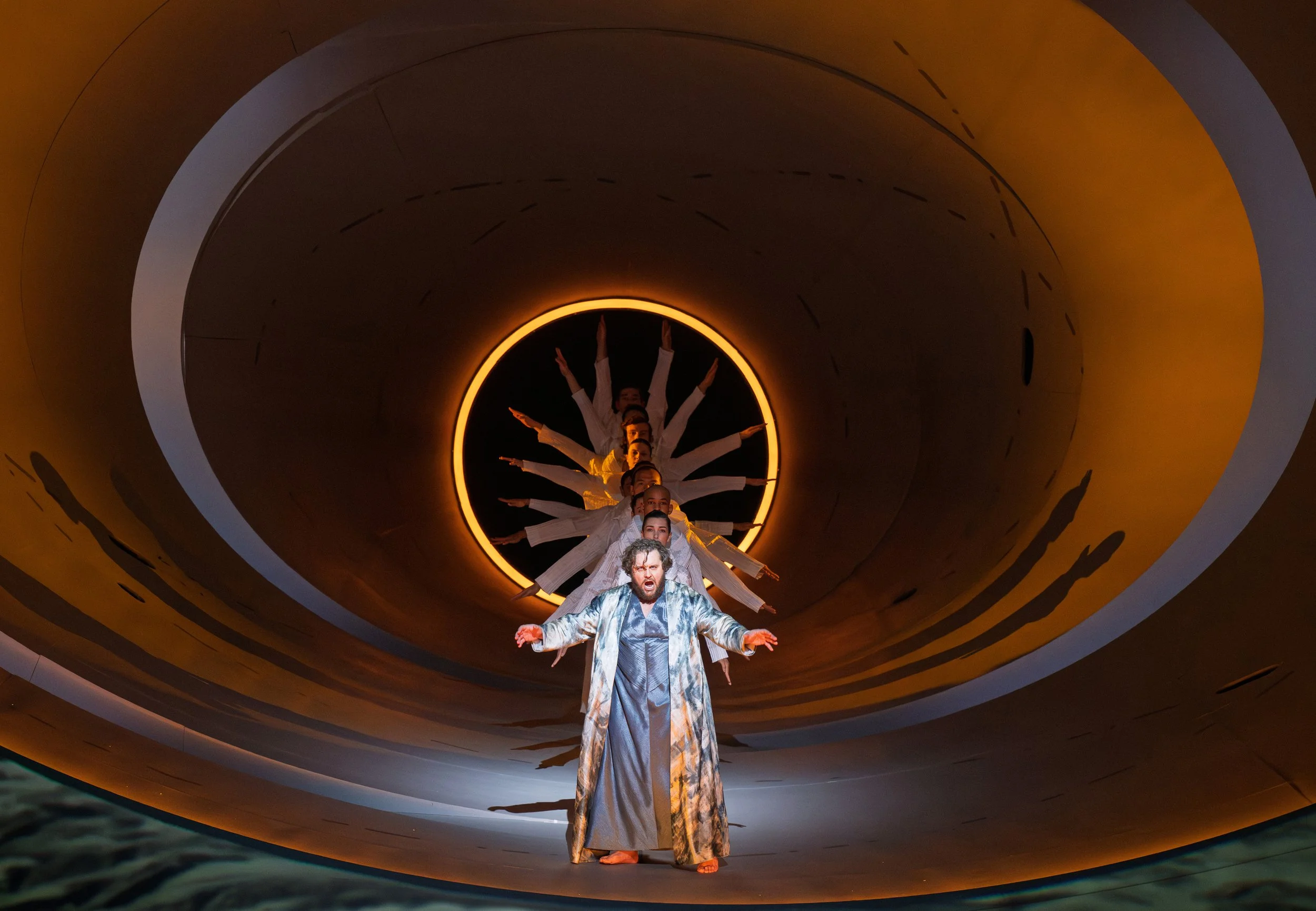
Sharon’s understanding of the opera as a ritualistic reenactment of the life-death-rebirth cycle is underscored by the second setting: a tunnel, which first appears in fragmented glimpses before becoming the main setting for Act III. Tristan spends much of this act in a state between life and death, the latter of which he likens to a return to the womb. Sharon identifies this state with the Tibetan Buddhist concept of the bardos of dying: the pain of death, the transfiguration of rebirth, and a medial stage characterized by introspection, clarity, and ultimately acceptance. The tunnel represents this act's status as a passage between destinations, a last embrace of the interstitial before the characters, cast, and audience are all delivered through death and—catalyzed by Isolde's final ecstasy—into rebirth.
Tristan und Isolde premiered to immediate and universal acclaim, leading the Met to extended the premiere run.
Photo credits:
Jonathan Tichler / The Metropolitan Opera (1–7)
Kinga Karpati and Daniel Zarewicz (8–13)
Karen Almond (14 & 15)